L'Arte de' Ciompi Artigianato di Firenze
HOME
E-SHOP
IDEE REGALO PER..
°
LABORATORIO
CHI SIAMO
CONTATTACI
°
L'ARTIGIANATO ITALIANO
COSA FARE A FIRENZE
COME LEGGERE I TAROCCHI
PINOCCHIO E FIRENZE
°
LAVORA CON NOI
SERVIZI E INFO
ANTICOVID
PAGAMENTI E SPEDIZIONI
CONDIZIONI DI VENDITA, RESI E PRIVACY
°
CERCA
SITEMAP
© 2020 L'Arte de' Ciompi di Susanna Capigatti - L' Arte de' Ciompi - Via de' Cerretani 18r - 50123 - Firenze - IT - p.iva 06925450485 - rea FI-666720
Tel: +39 339 8910460 - Mail: arteciompi@gmail.com - © L'Arte de' Ciompi 2020

Via de' Cerretani 18R, Firenze arteciompi@gmail.com
L'Arte de' Ciompi Artigianato di Firenze
HOME
E-SHOP
IDEE REGALO PER..
°
LABORATORIO
CHI SIAMO
CONTATTACI
°
L'ARTIGIANATO ITALIANO
COSA FARE A FIRENZE
COME LEGGERE I TAROCCHI
PINOCCHIO E FIRENZE
°
LAVORA CON NOI
SERVIZI E INFO
ANTICOVID
PAGAMENTI E SPEDIZIONI
CONDIZIONI DI VENDITA, RESI E PRIVACY
SITEMAP
© 2020 L'Arte de' Ciompi di Susanna Capigatti - L' Arte de' Ciompi - Via de' Cerretani 18r - 50123 - Firenze - IT - p.iva 06925450485 - rea FI-666720
Tel: +39 339 8910460 - Mail: arteciompi@gmail.com - © L'Arte de' Ciompi 2020
CONTENUTI DEI LIBRI
Le edizioni artigianali che abbiamo creato hanno origine nell'antichità, e riproducono i loro antenati in ogni più piccolo dettaglio.

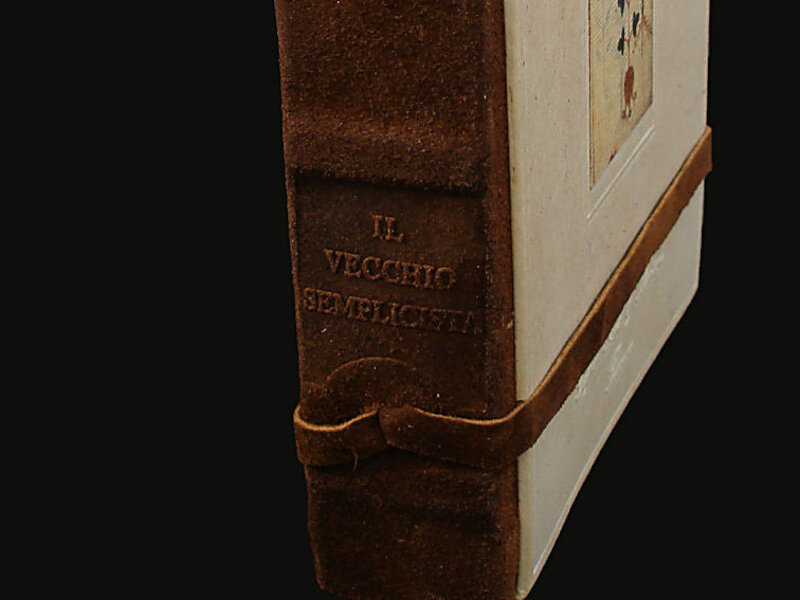
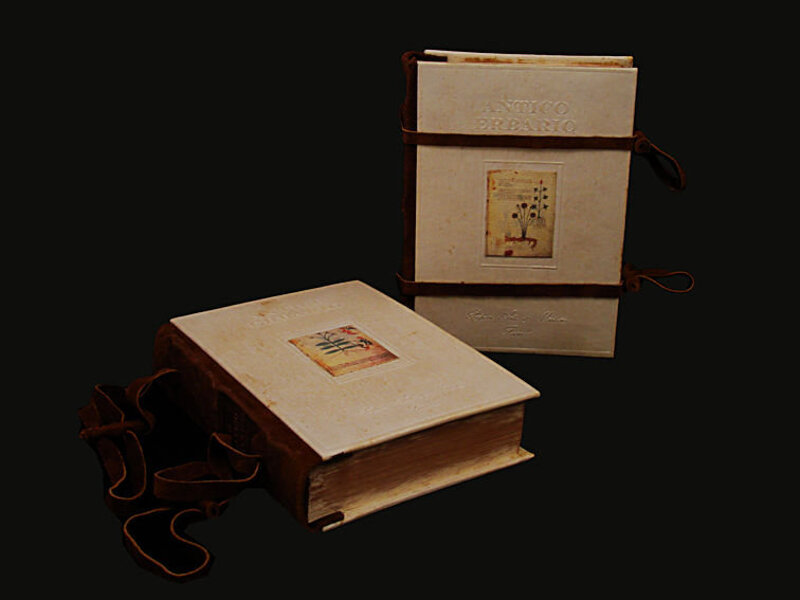
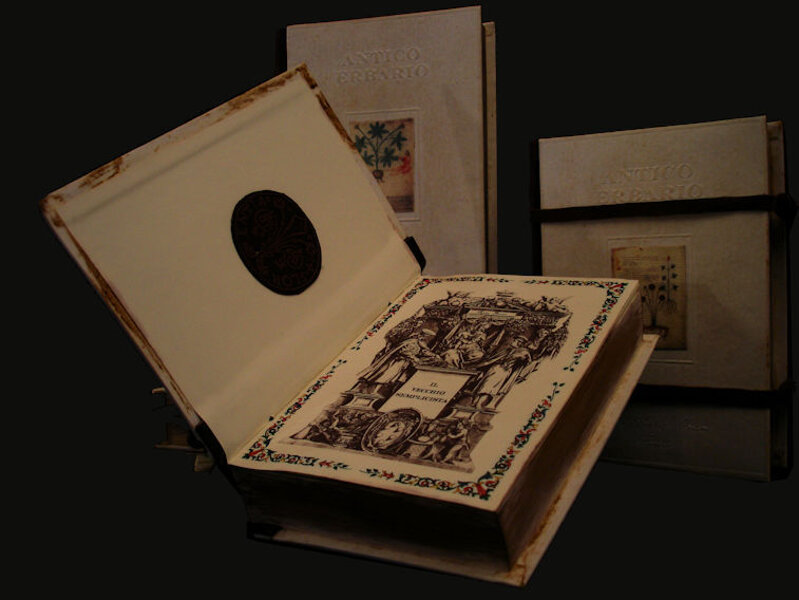
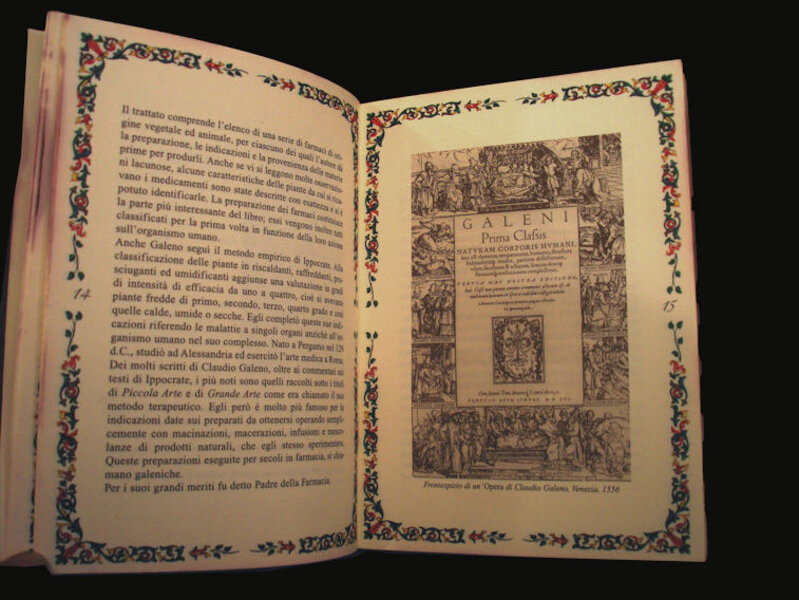
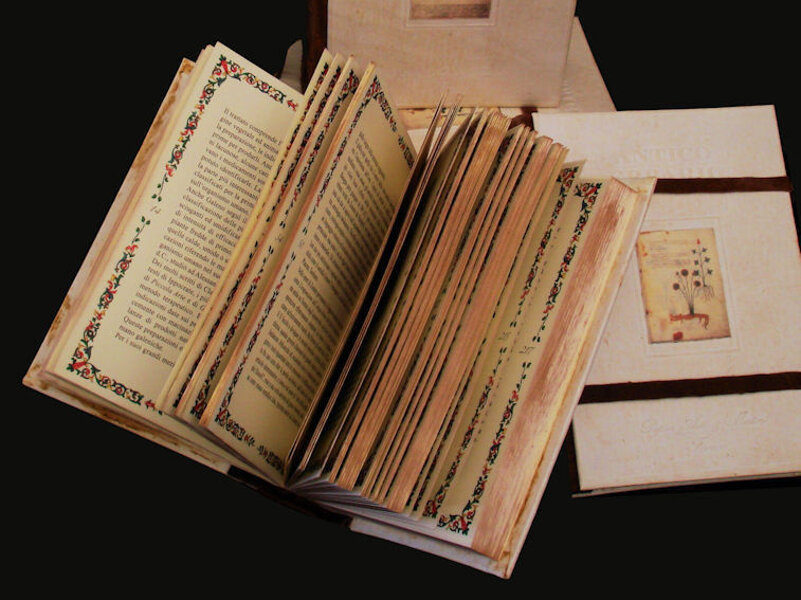
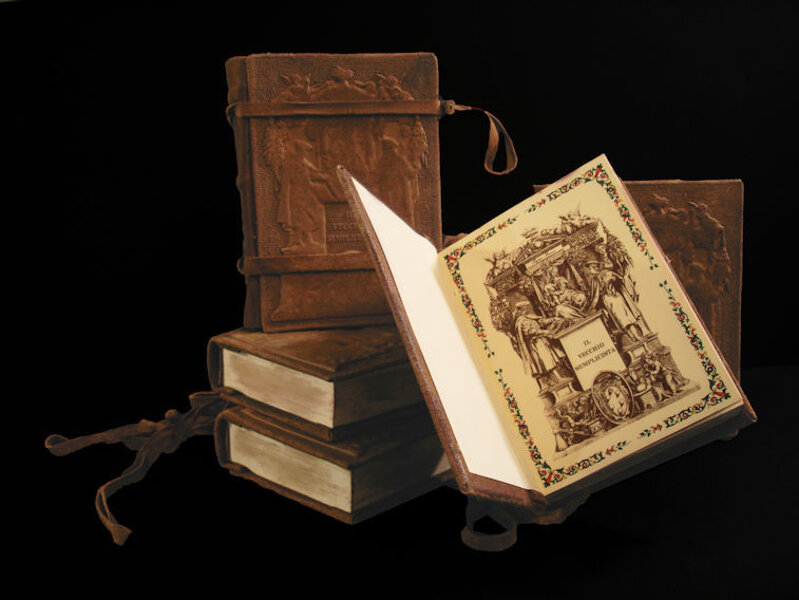
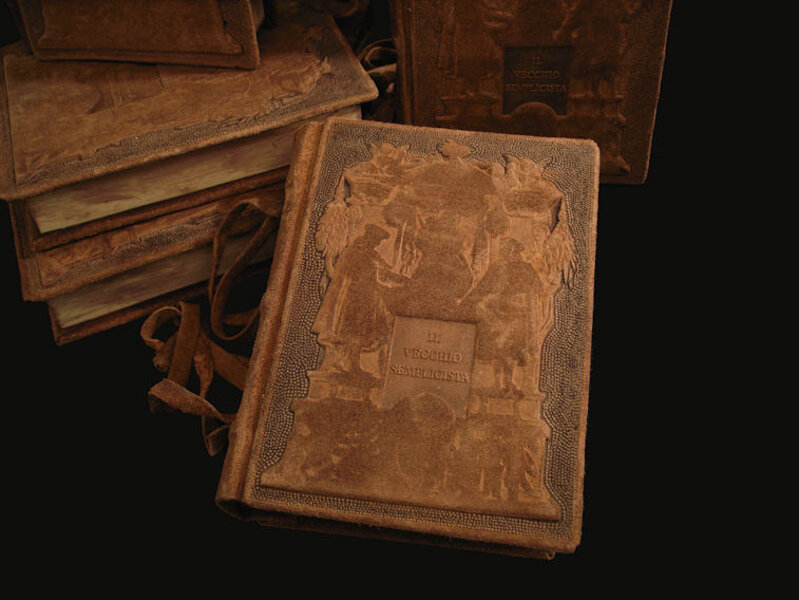
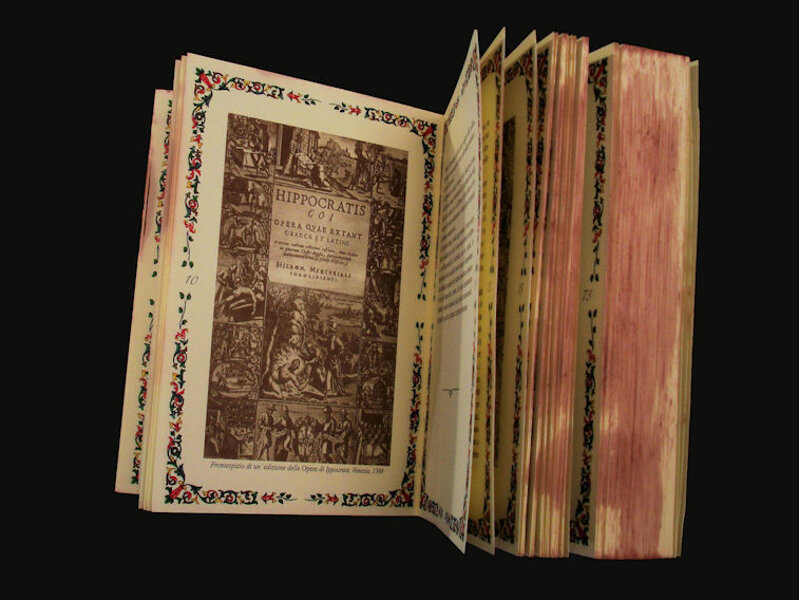
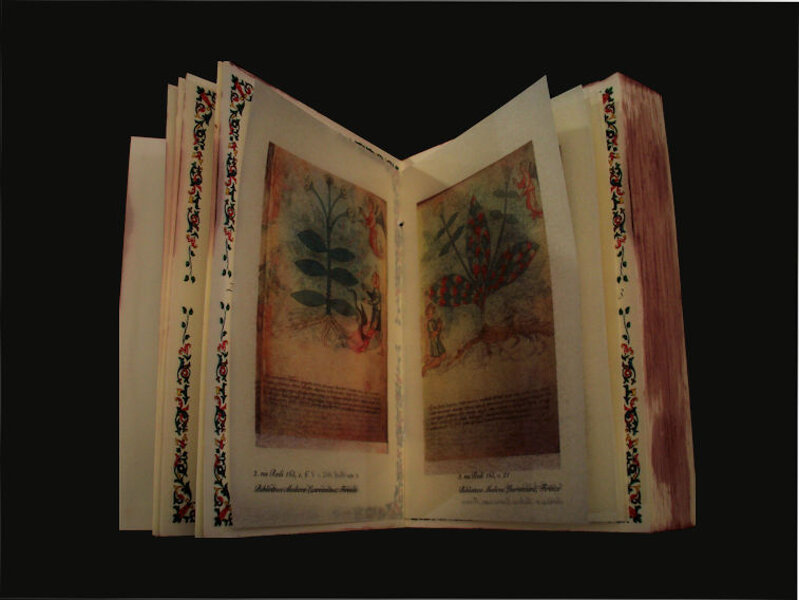
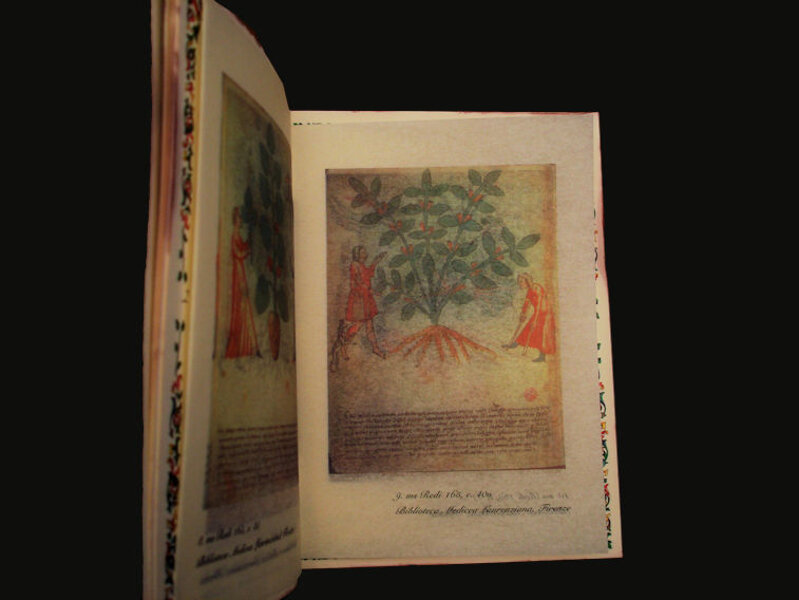
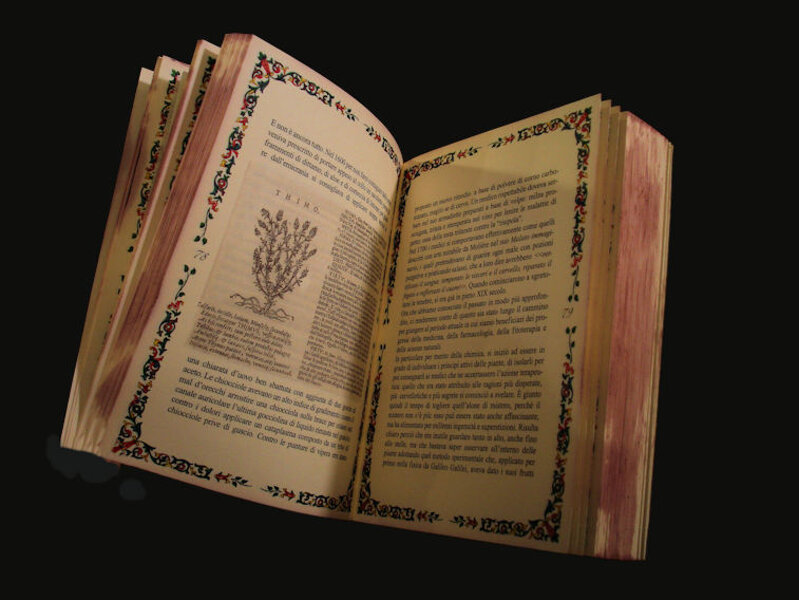
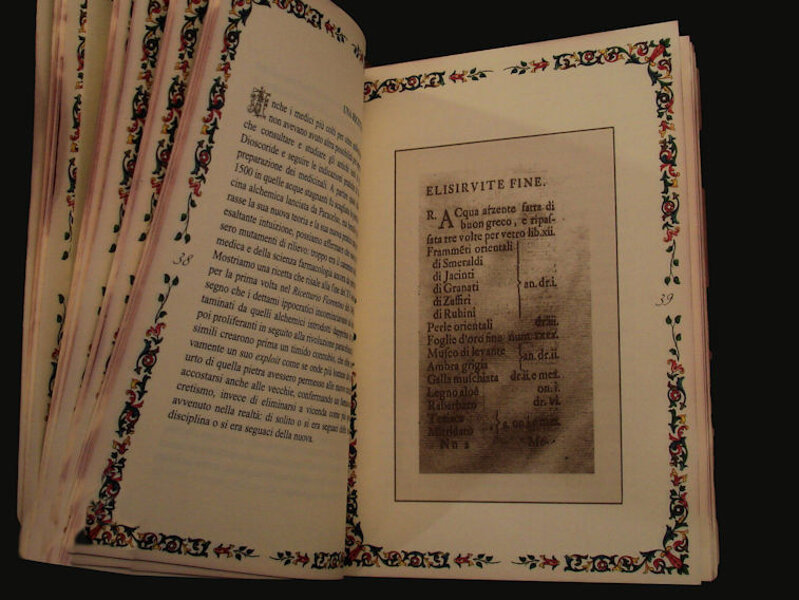
Antico Erbario "Il Vecchio Semplicista"
Il "Semplicista" del titolo era lo studioso di erbe medicinali, o meglio, dei "semplici", le varietà vegetali con virtù medicamentose. A Firenze vi è il "Giardino dei Semplici", nato nel 1545 a volontà di Cosimo de' Medici.
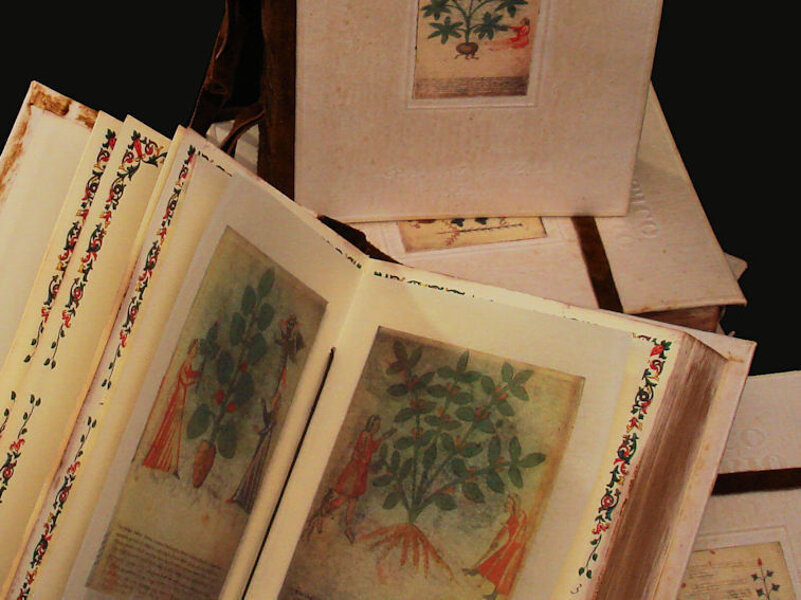
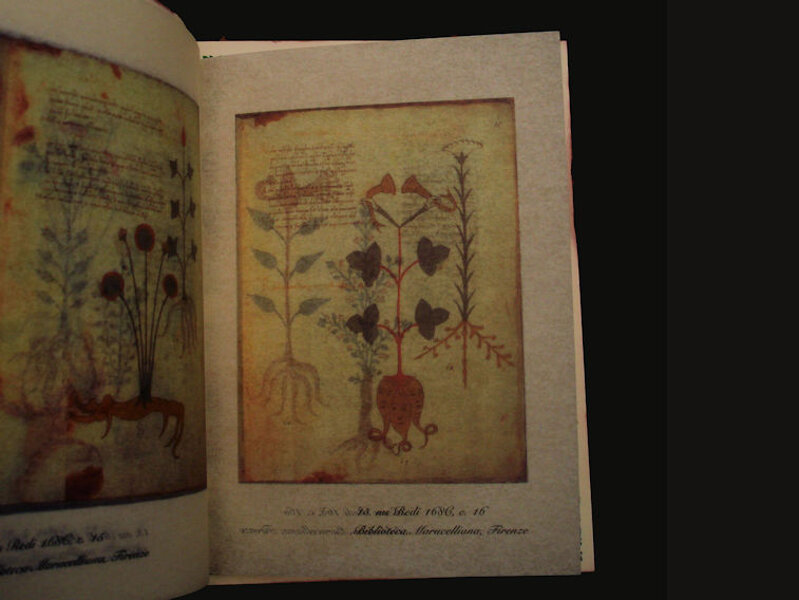
Questo libro è un meraviglioso testo sulle proprietà medicamentose, officinali, medicinali e culinarie di piante, fiori, erbe e radici, dai più comuni ai più rari, fino a quelli velenosi. Ognuna è accompagnata da bellissime riproduzioni di acqueforti antiche.
Il disegno riprodotto sulla copertina in cartonlegno è una miniatura delle pergamene colorate interne; per il libro in pelle la pressatura esterna è il frontespizio dell'Antico Ricettario conservato al Museo della Storia della Scienza di Firenze.
Nella prima parte si trovano le informazioni sulla storia della medicina fin dalla preistoria: Sciamanesimo, preludi di Ippocrate, Galeno, Orti Benedettini, Scuola Salernitana, fino al Giardino dei Semplici.
Informazioni su scuole in cui il medico era anche un mezzo stregone: Esoterismo, i Sette Insegnamenti, l'Alchimia dei quattro elementi e altre notizie su La Tavola Smeraldina, Numerologia, Cabala, Alchimia Verde.
Poi si trovano le Vecchie ricette e cure popolari: tosse e raffreddore, acido acetilsalicidico, elisir di lunga vita con triti di pietre magiche e oro zecchino.
All'interno le pergamene a colori raffigurano alcune piante per intero, con un angelo che indica la parte della pianta da usare, e in calce si trova lo scopo curativo della pianta (la Mandragola, per esempio, pianta allucinogena e afrodisiaca; ma anche erbe per curare il morso del cane, la puntura del serpente o la varicella).

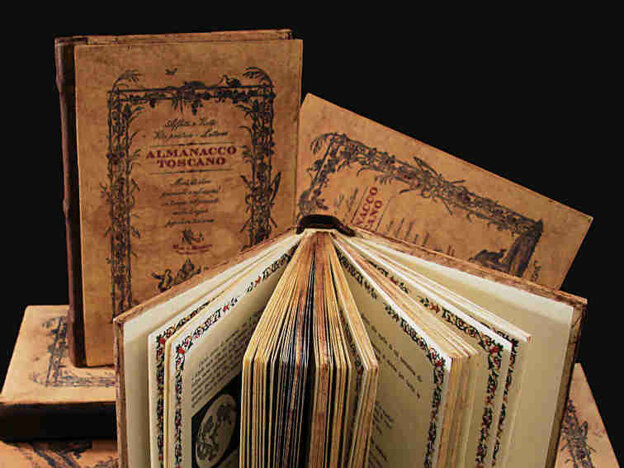
Almanacco Toscano
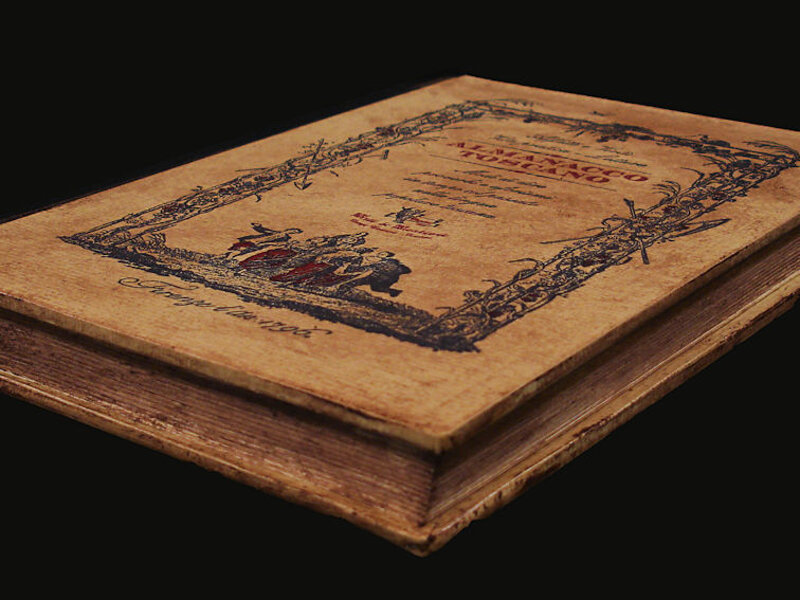
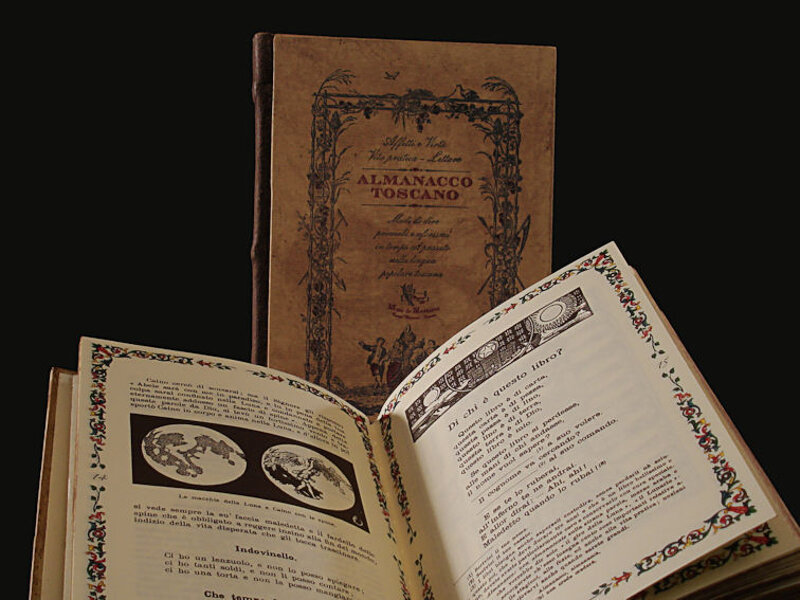
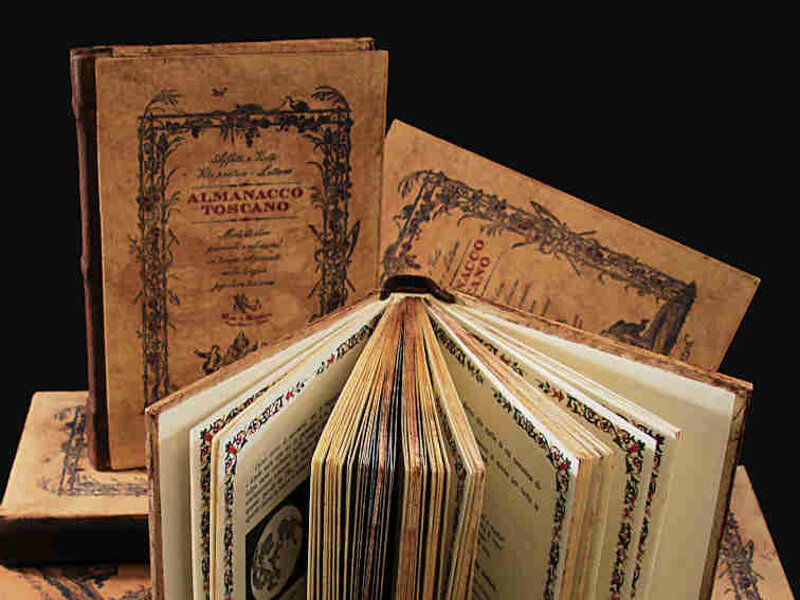
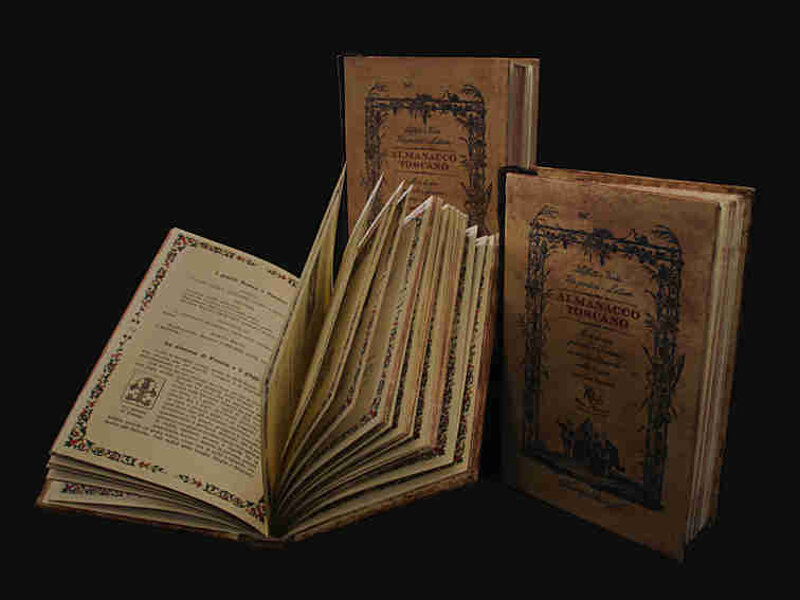
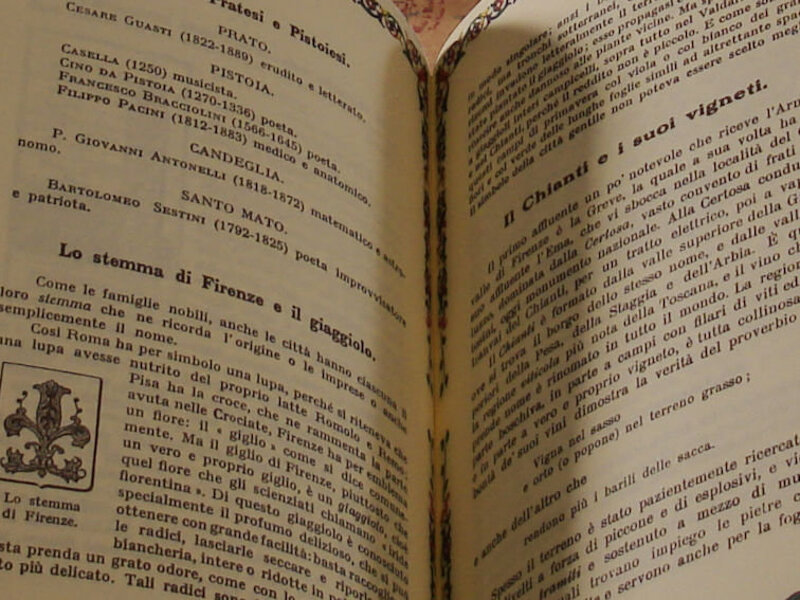
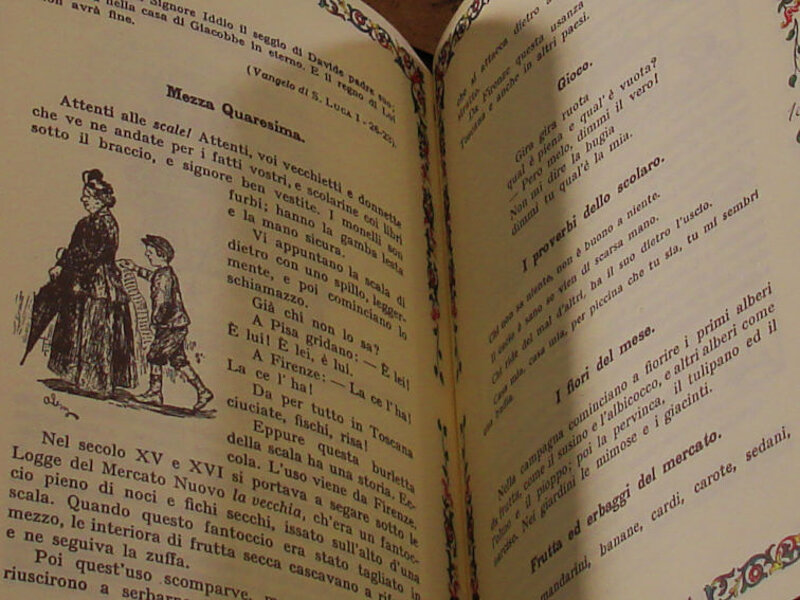
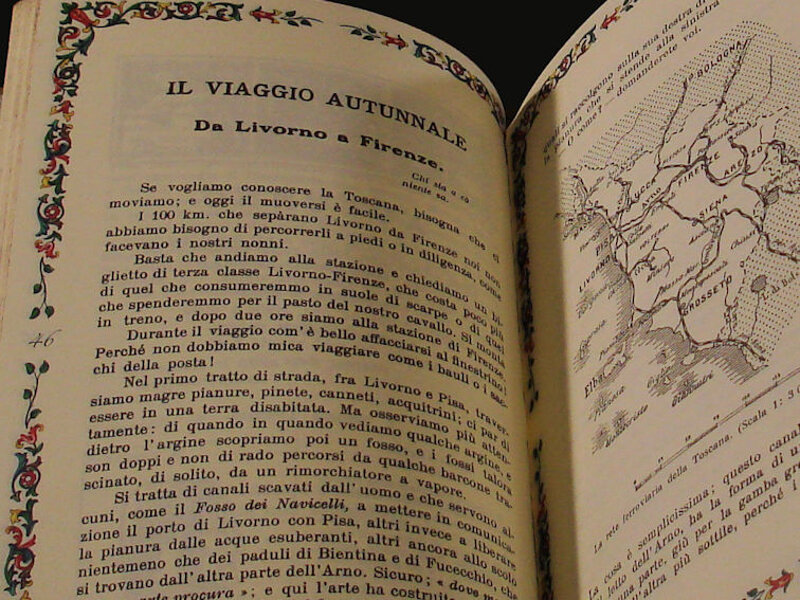
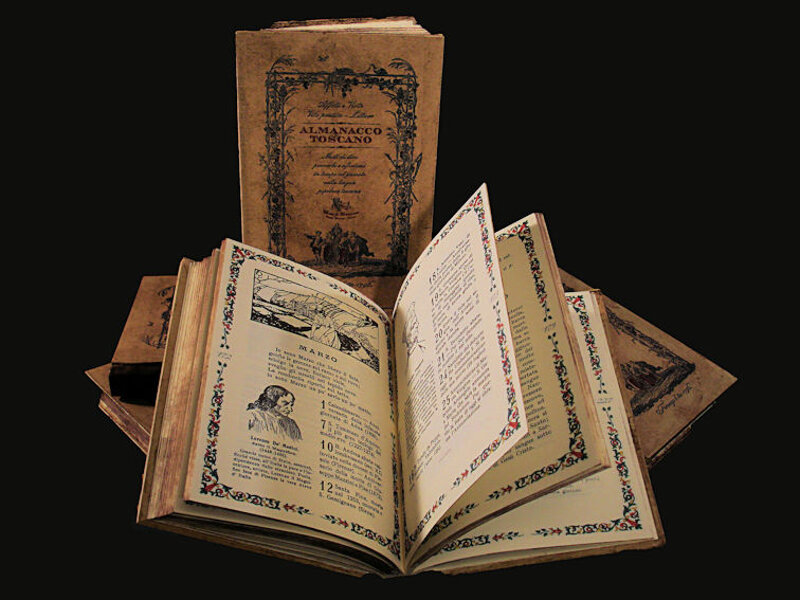
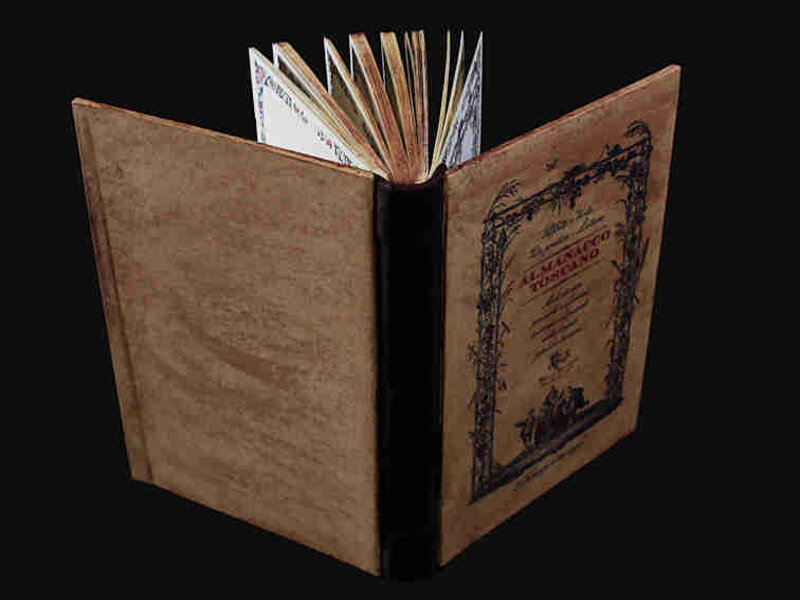
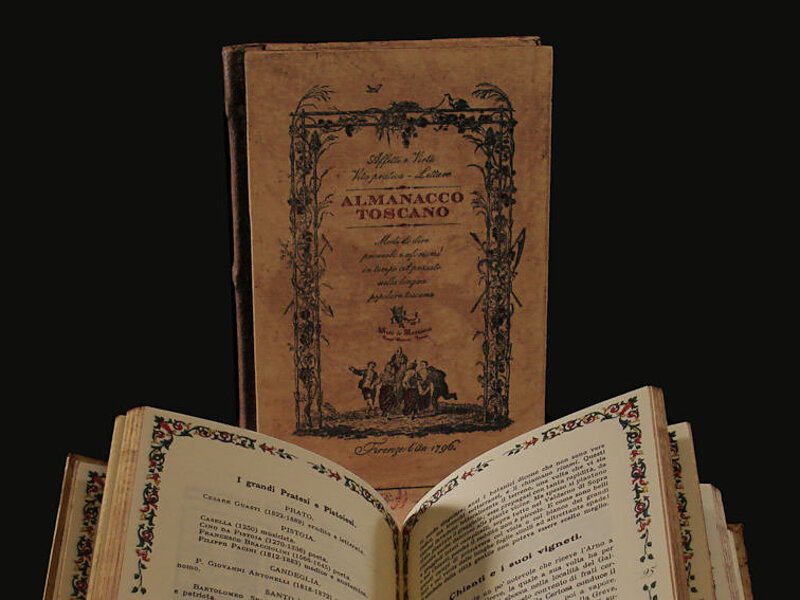
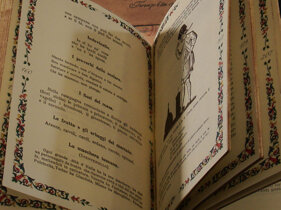
Ristampa dell'antico libriccino edito nel 1796, in origine usato dai ragazzi come testo di lettura e cultura generale nelle Scuole Medie Statali, conosciuto anche come il Libretto Verde, studiato per tramandare le tradizioni della terra Toscana.
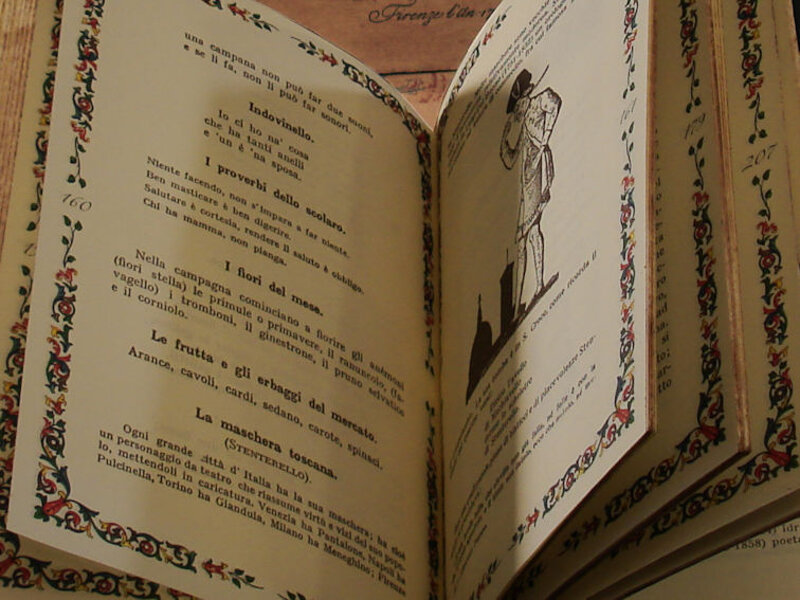
E' una simpaticissima raccolta di modi di dire, filastrocche e ritornelli toscani: ogni pagina è un tuffo nella saggezza dei nostri nonni... "Febbraio febbraietto, mese corto e maledetto"; "Febbraio ventoso, febbraio amoroso". Ci sono anche proverbi, canzonette, indovinelli dell'epoca e testi delle melodie "ninnananna"per addormentare i bambini.
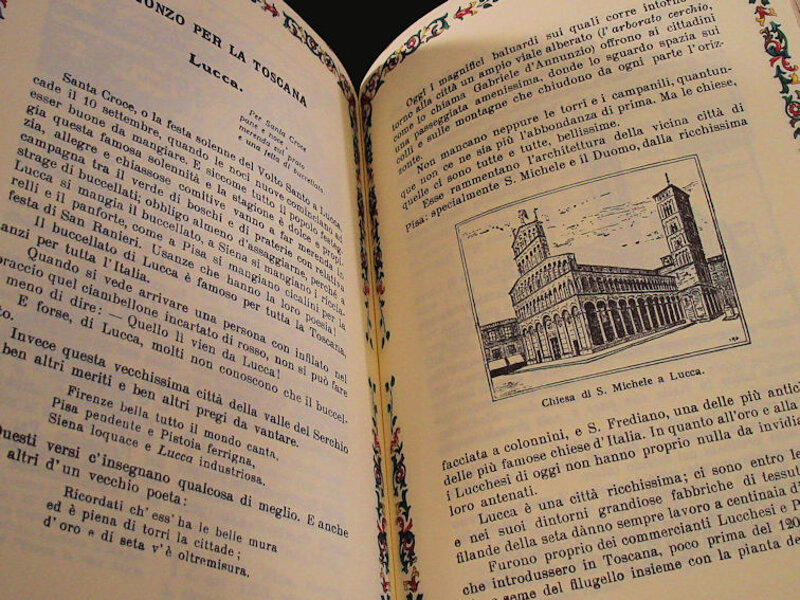
Ogni capitolo apre con piccole descrizioni di tutte le città della regione, da Firenze a Pisa a Livorno, con curiosità e tradizioni antiche, feste locali, periodi di raccolta delle verdure, piatti e alimenti tipici, personaggi locali famosi tra pittori, inventori e musicisti. Si può dire che l'Almanacco Toscano è stata la prima "Guida Michelin" della storia.
Ogni pagina è arricchita da bellissime riproduzioni di disegni a china originali del libro, che lo rendono un pezzo di ornamento senza tempo.
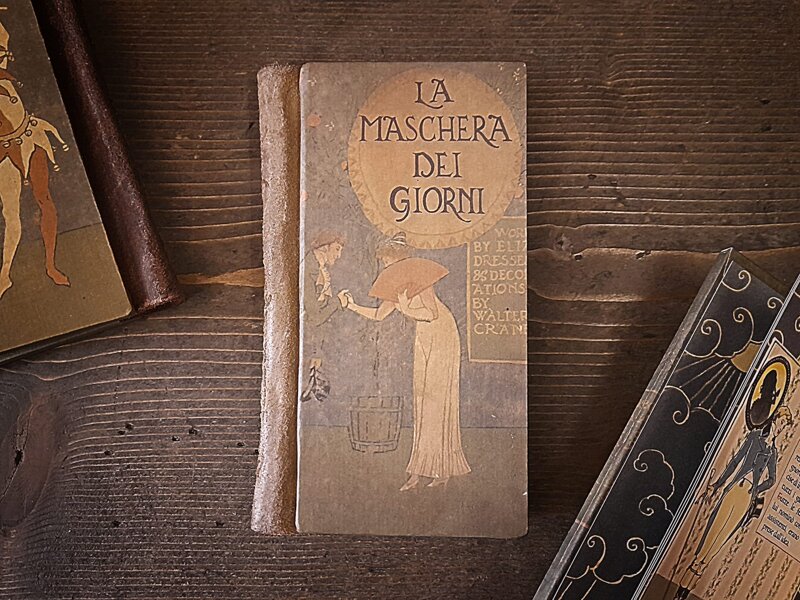
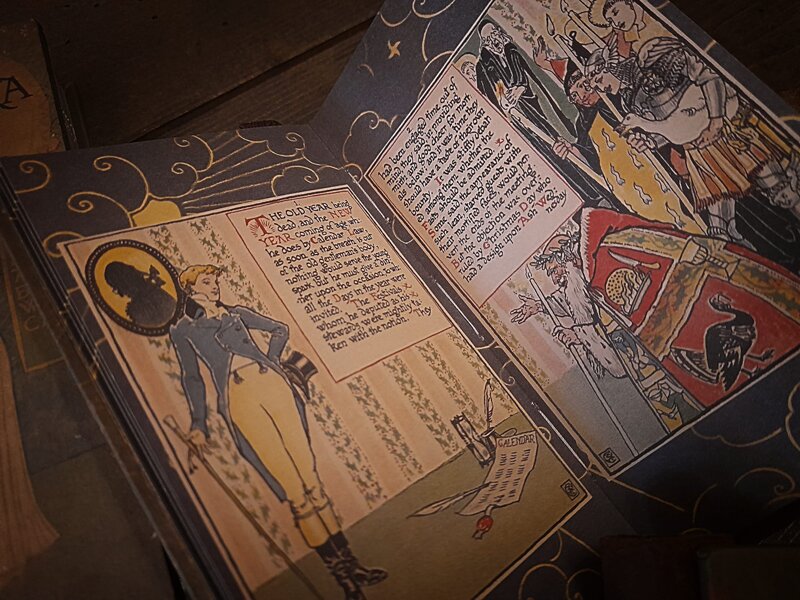
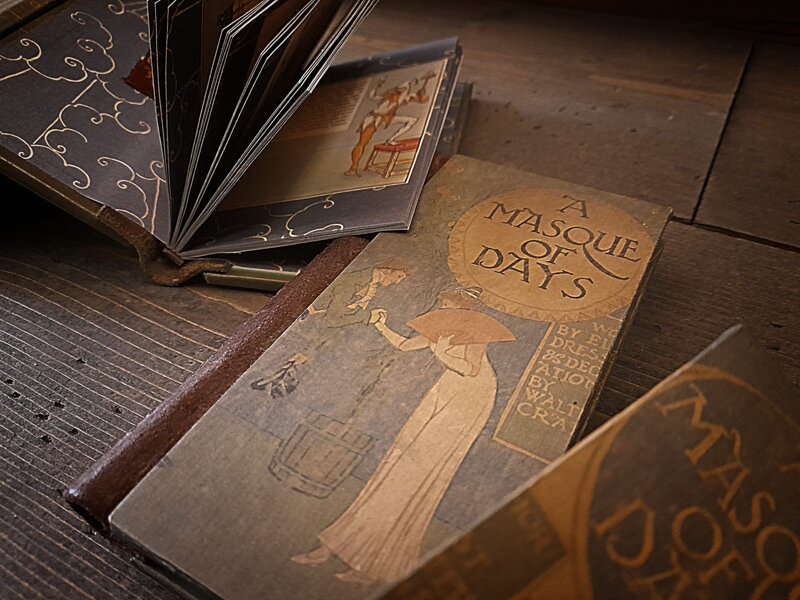
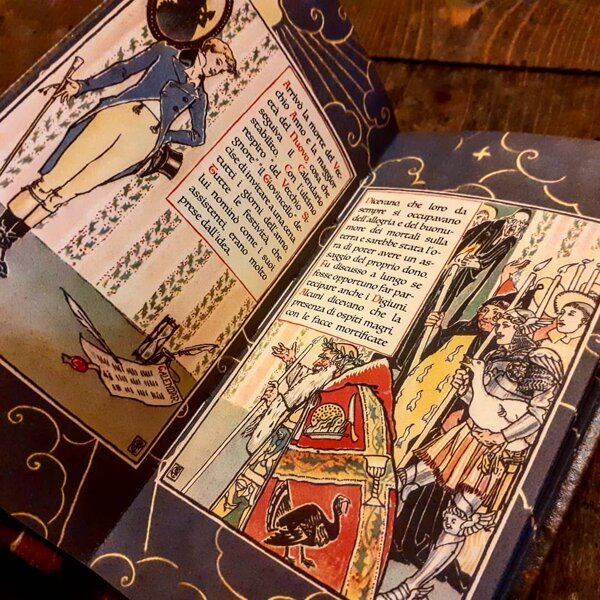
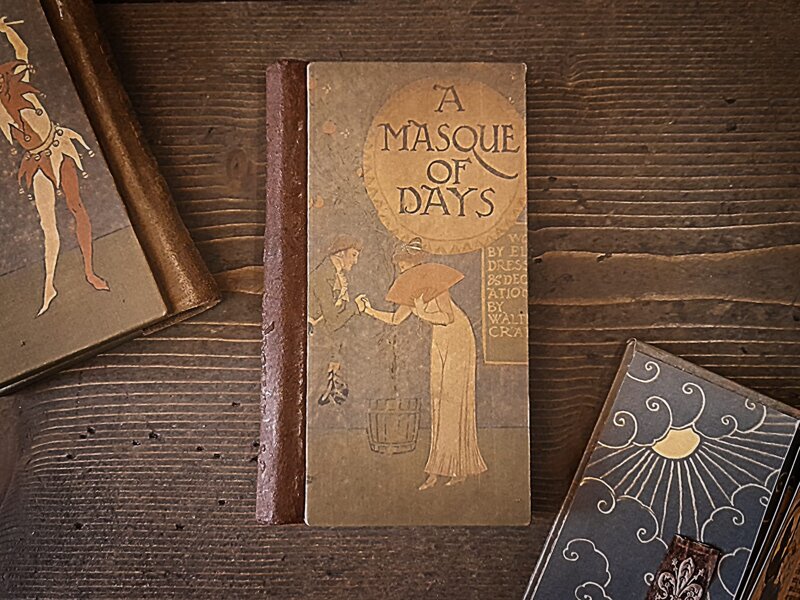

La Maschera dei Giorni
Il testo del libro fa parte della raccolta "Last Essays of Elia" di Charles Lamb, pubblicati per la prima volta in forma di libro nel 1833.
Le edizioni americane furono pubblicate a Filadelfia nel 1828. All'epoca, gli editori americani non erano vincolati dalla legge sul copyright e spesso ristampavano materiali da libri e periodici inglesi; così la raccolta americana degli Ultimi Saggi ha preceduto di cinque anni la sua controparte britannica.
Questo libro che abbiamo ristampato fu illustrato dal famoso artista inglese Walter Crane, e fu stampato nel 1901 dall'azienda britannica Cassell and Company Limited. Sulle prime pagine troverete questi riferimenti.
La ristampa è stata fatta sia in originale inglese, che in italiano.
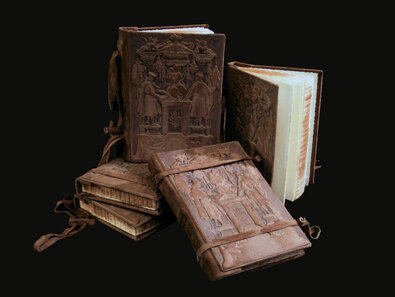
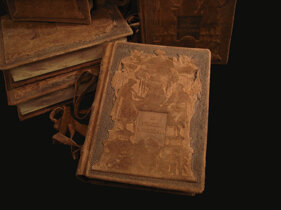
I Libri sono tutti realizzati con carta fiorentina e tecniche antiche di litografia. I dettagli, le costole o tutto il rivestimento è in pelle di vacchetta toscana. Le componenti in cartonlegno sono invecchiate con metodi tradizionali.
CONSIGLI PER UN REGALO PERFETTO
L'Almanacco Toscano è un regalo impeccabile per gli amanti della storia, per chi cerca un oggetto originale di Firenze e della Toscana, per chi vuole scoprire di più su questa bellissima regione senza rinunciare all'Arte e alla bellezza.
L'Erbario è una mitica e singolare edizione, per la storia della medicina che riporta e per la simpatia con cui l'affronta sarà molto apprezzata da un Dottore od un Medico. Sarà un regalo prezioso ed amato soprattutto da un Erborista od un Naturopata. Regalo perfetto sarà anche per gli appassionati di natura, di piante e fiori. Le streghe ed i curiosi dei "rimedi della nonna" resteranno affascinati dalle curiosità e dalle informazioni che vi troveranno.
Il testo di un libro rilegato e invecchiato a mano, artigianale ed in stile antico è sicuramente un omaggio elegante che possa affascinare chi lo riceve. Lasciatevi ispirare dai nostri oggetti unici e introvabili con il fascino della storia e dell'arte.